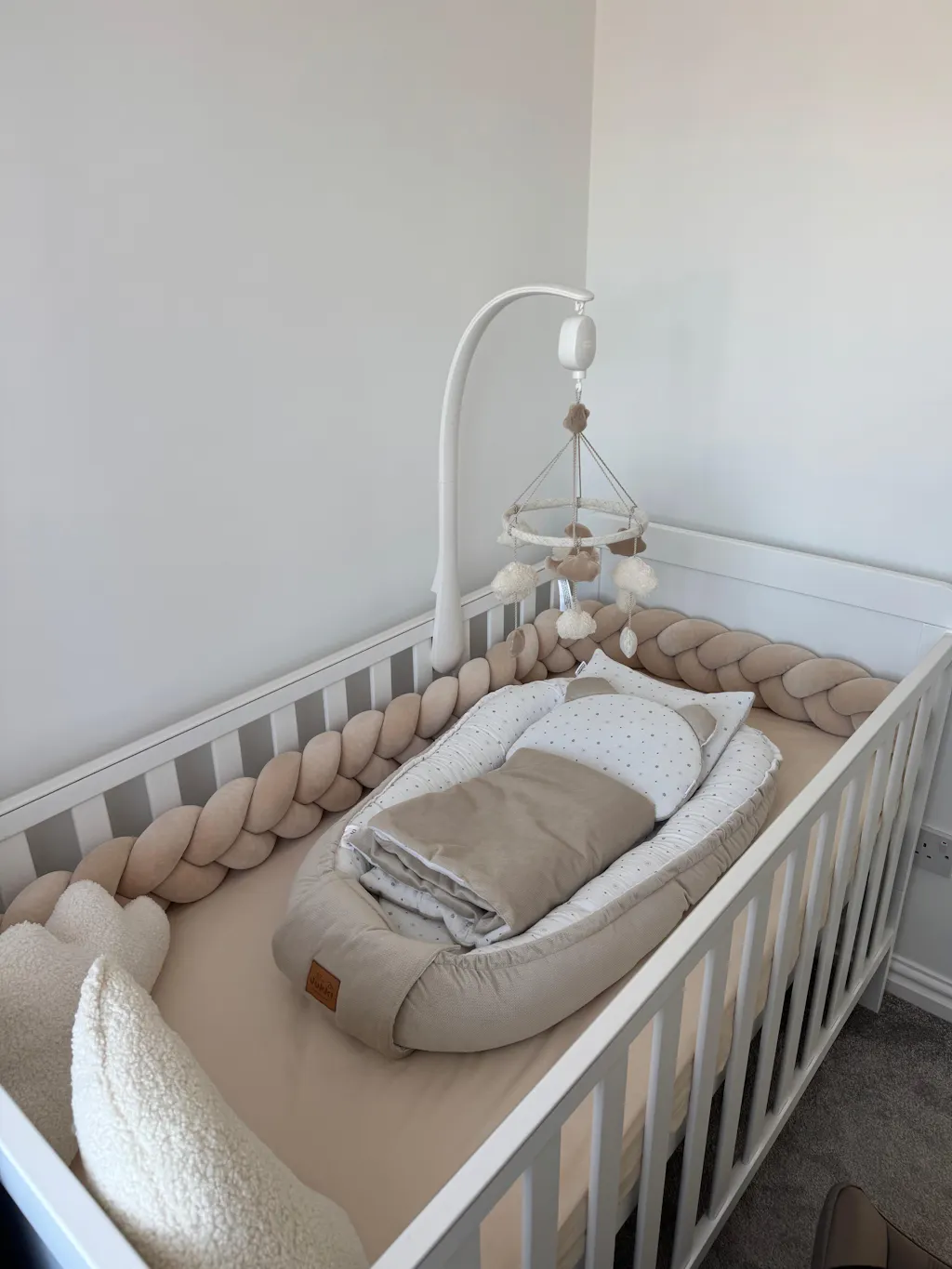

Baby nests are one of those newborn essentials many parents quickly come to love. They create a cosy, familiar spot for baby during the day and can make those early weeks feel a little more settled. But as your baby grows and becomes more active, it’s completely natural to wonder when it’s time to stop using one.
In this guide, we’ll explain when a baby nest may no longer be the right fit, the signs to look out for, and what to use next as your baby moves into a more active stage.
Featured product

What Is a Baby Nest Used For?
A baby nest is designed to create a soft, snug space for supervised daytime use. Many parents use one for resting, cuddles, or having a comfortable place to put baby down while keeping them close.
They’re especially helpful in the early weeks, when babies tend to prefer a smaller, more enclosed space.
You can explore our collection of baby nests, handmade in Europe from carefully selected fabrics.
When Should You Stop Using a Baby Nest?
There isn’t a fixed age that applies to every baby. Instead, it’s best to look at your baby’s development and how they’re using the nest.
Signs It May Be Time to Stop Using a Baby Nest
- Your baby starts rolling or turning more independently
- They become more active and less settled in one place
- The nest starts to feel too small or restrictive
- They want more room to stretch, kick and move
For many babies, this shift happens naturally over time. You may simply find yourself using the nest less and less as your baby becomes more curious and mobile.
Why This Transition Happens
In the early weeks, babies often enjoy that snug, enclosed feeling. But as they grow, their needs change — they begin to explore movement, stretching, and eventually rolling.
At this stage, having more space becomes more important than being held in a smaller, defined area.
What to Use After a Baby Nest
Once your baby becomes more active, the focus shifts from snug comfort to space, movement and flexibility. This is where a few simple alternatives work really well.
1. A Play Mat for Freedom to Move
A play mat is often the most natural next step. It gives your baby space to stretch, kick, roll and explore while still being comfortable and supported.
This stage is when babies start becoming more engaged with their surroundings, so having a larger, open area makes a big difference.
2. A Bordered Play Space (A Practical Transition)
Many parents find that moving from a baby nest to a completely open space can feel like a big jump. That’s where a soft, bordered play area can be a great in-between solution.
This can be created using:
- Large play mats with raised edges
- Soft braided cushions or bed cushions placed around the edge
This gives your baby more room to move, while still keeping that gentle sense of boundary that many babies are used to.

3. A Flexible Daytime Setup
At this stage, most parents naturally move towards a more flexible routine. Instead of one main “spot”, your baby may spend time:
- On a play mat
- On the floor next to you
- In different rooms throughout the day
This reflects how quickly babies change in those early months — and why adaptability becomes more important than a single product.

Can You Still Use a Baby Nest Occasionally?
Once your baby becomes more mobile or outgrows the nest comfortably, it’s usually a sign to move on. At this stage, a more open and spacious setup will better support their development and everyday movement.
Do You Need to Stop Using It Suddenly?
Not at all. For most families, this is a gradual transition. As your baby becomes more active, you’ll likely find yourself reaching for the nest less often until it naturally falls out of your routine.
Our Final Thoughts
Baby nests can be a lovely part of the baby stage, offering comfort and convenience during those early months. But as your baby grows, their needs shift towards movement, exploration and more space.
Watching for simple signs — like rolling, increased movement, or outgrowing the nest — will help you decide when the time feels right.
And when that moment comes, moving to a play mat or a softly bordered play space can feel like a very natural next step.
If you’re still in the newborn stage, you can browse our collection of baby nests, designed for comfort, quality and everyday family life.
Frequently Asked Questions
At what age should you stop using a baby nest?
There isn’t one exact age. Most parents transition away from a baby nest once their baby becomes more mobile, starts rolling, or needs more space to move comfortably.
How do I know if my baby has outgrown their nest?
If your baby looks cramped, moves more actively, or seems less settled in the nest, it’s usually a sign they’re ready for a more spacious setup.
What is the next step after a baby nest?
A play mat is often the most natural next step, sometimes combined with a softly bordered space using bed cushions or cot bumpers for a more gradual transition.
Do I need a replacement for a baby nest?
Not necessarily. Many parents simply move to a more open space that allows their baby to move freely while staying close by.
You can also read our full guide: Baby Nest Safety Guide